

Ideally, we’d all live in a world where anyone could walk down an empty street alone at night without worry. Unfortunately, there are real dangers out there for both men and women. Staying aware of your surroundings and alert to what’s around you matters — and so does carrying the right personal safety devices and following a few reliable strategies for when you, or someone you love, is out and about after dark.
Is It Actually That Dangerous to Walk Alone at Night?
Walking alone is riskier for the simple reason that you’re an easier target for criminals, and statistics consistently show that most crime happens after dark. Walking alone at night is always going to carry more risk than walking with a group at night or walking by yourself during the day — which doesn’t mean you should be afraid to do it, just prepared.
How to Stay Safe at Night When Walking Alone
It’s always best to avoid walking alone at night when you can. However, sometimes it’s simply unavoidable — your car breaks down, your shift ends late, or you find yourself on a street that’s usually busy but happens to be empty tonight.
In these situations, follow these guidelines for safety.
Walk with purpose and don’t stop
Would-be attackers are looking for easy targets. Someone walking slowly with their head down, or distractedly looking at a phone, reads as an easy target. Walk purposefully, with good posture and your head up — it silently signals confidence to anyone who might try to get in your way. Don’t stop walking or slow down to check your phone, make a call, or look at a map until you’re in a more populated or well-lit area.
Carry a way to call for help
Personal safety devices come in a lot of forms — alarms, wearable panic buttons, sprays, and lights. If you’ve never owned one before, a loud personal alarm is a good place to start.

Hootie clips right onto your keys, so it’s always within reach. Pull the loop and it sets off a 130 dB siren — loud enough to draw immediate attention — along with a bright strobe light to disorient a potential attacker and help others spot exactly where you are. It’s TSA-approved, so it travels with you, and the battery is designed to last up to a year.
If you’d rather your safety device not look like a safety device at all, a wearable panic button hidden inside everyday jewelry is worth a look.

invisaWear looks like ordinary jewelry — a necklace, bracelet, or charm — but a quick double-click on the hidden button silently sends your GPS location to trusted contacts and can place a call to 911, all without an attacker knowing anything happened. It runs on a battery rated for up to three years, so there’s no charging to remember, and it doesn’t rely on unlocking or holding your phone in a moment when every second counts.
Carry something in your hand
Would-be attackers are also more cautious around pedestrians who are visibly carrying something in their hands — it reads as less of an easy target. This can be as simple as an umbrella or a bag you can swing if needed, or a purpose-built device.
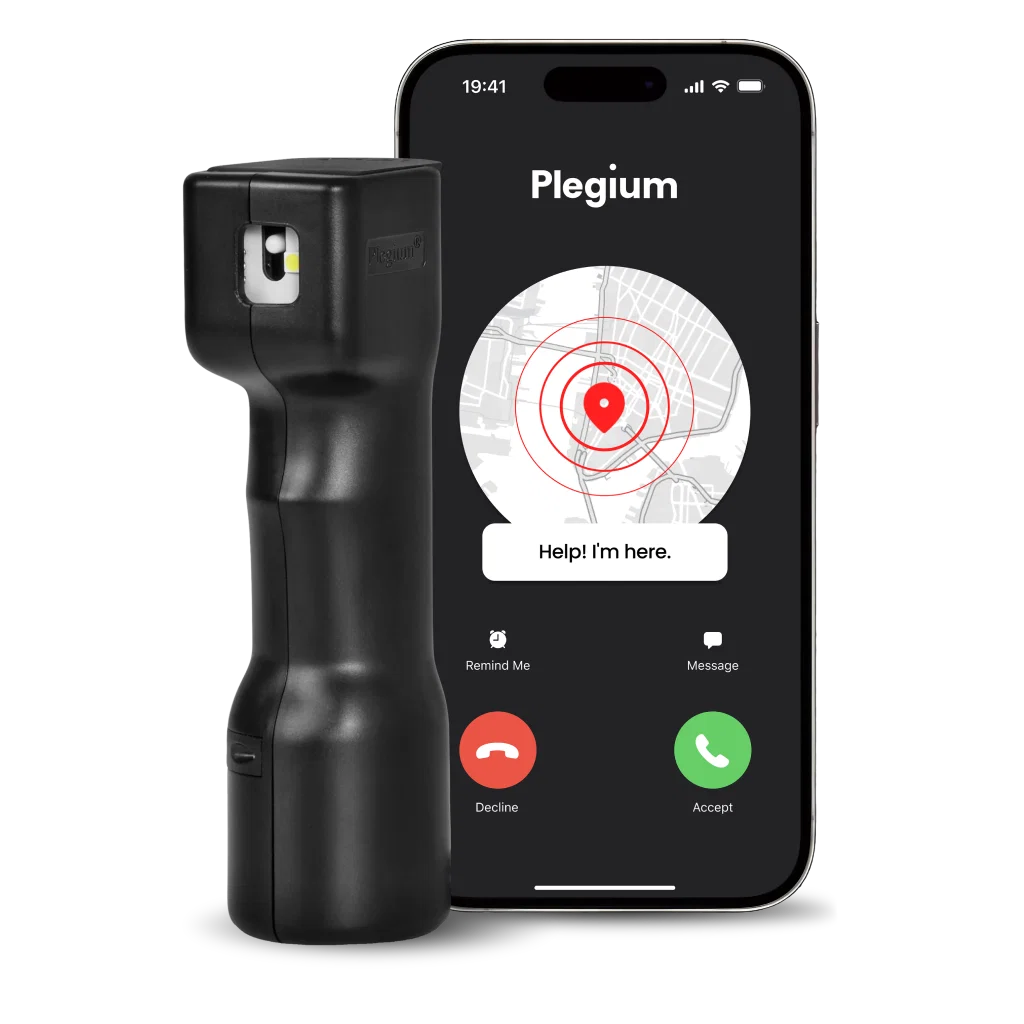
One of the most effective things to carry is a debilitating device like the Plegium Smart Pepper Spray. It works as pepper spray, but it’s also a blinding strobe light, a loud emergency alarm, and a connected alert system that can text and call your trusted contacts the moment it’s activated.
If all you have on hand are your keys, push one key between each finger and make a fist — and if you’re heading toward your car or front door, have your key out and ready before you get there. Attackers often target people while they’re distracted, fumbling for keys in a doorway or parking lot.
Make yourself visible
Being seen is its own form of safety — by drivers, by other pedestrians, and by anyone who might think twice about approaching someone who’s clearly visible rather than an easy target in the dark.

The Torch Ring is a wearable flashlight that slips onto your finger, freeing up your hands while still lighting your path — a smart option if you’re walking, running, or need both hands free to hold keys or a phone.
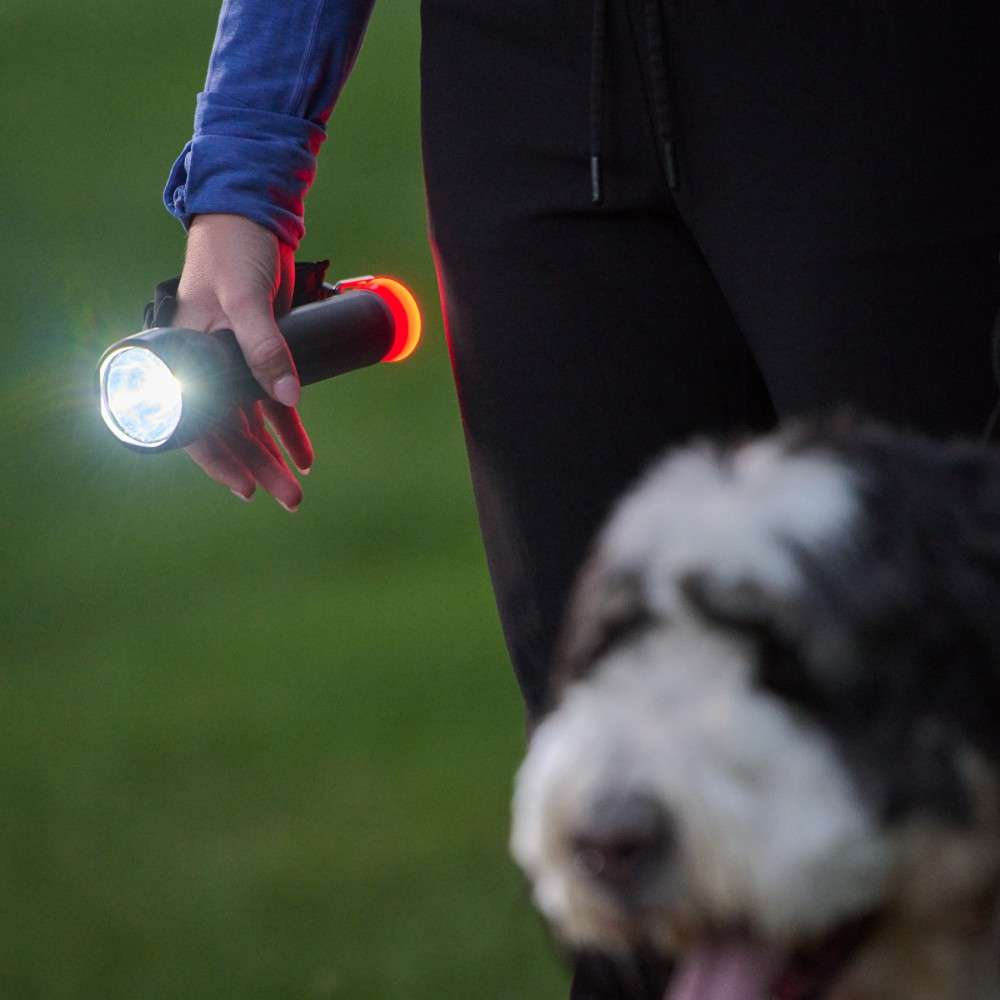
For a brighter, more traditional flashlight, the Firefly Flashlight puts out 350 lumens with a beam that reaches up to 300 meters, and includes a flashing red light mode specifically for making yourself visible to cars and passersby. A small zippered pouch in the handle holds keys or other essentials, so it doubles as a place to stash your things.
Stay aware, even with headphones on
If you like to listen to music or a podcast on your walk, standard earbuds can block out the sounds that actually help you stay alert to your surroundings — footsteps, traffic, or someone approaching.
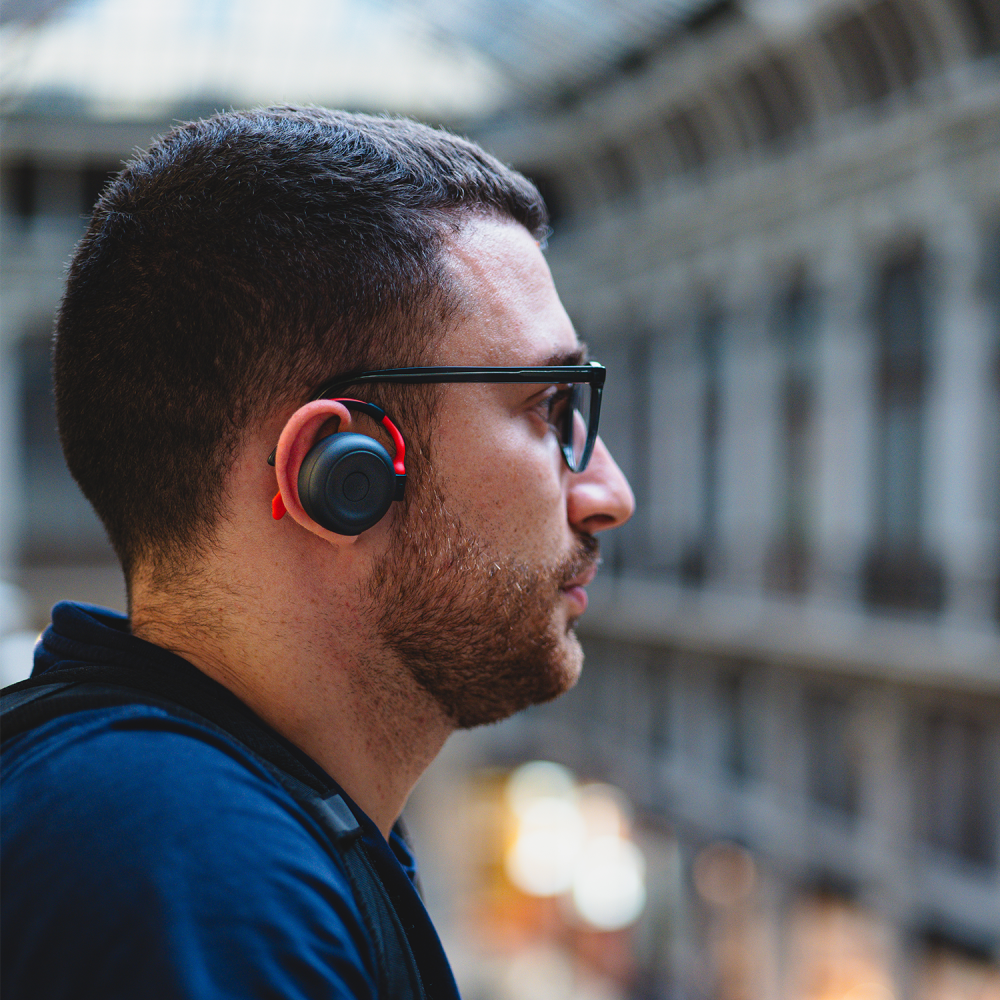
Spider open-ear headphones rest on your ear instead of sealing inside it, so you can hear your audio clearly while staying fully tuned in to what’s happening around you — up to 28 hours of battery life means they’ll last through even a long commute or shift.
Walking the dog after dark
If your nightly walk includes a dog, visibility matters for both of you — a dog darting into a dark street is just as much of a hazard as an unseen pedestrian.

The Headlight Harness is a dog harness with a built-in LED beam, keeping your dog lit up and visible to cars and other pedestrians while also lighting a bit of the path in front of you both.
Stay away from alleyways and dark corners
It’s always best to steer clear of dark places like alleyways, spaces behind dumpsters, or blind corners. If you’ll need to pass an alleyway entrance on the sidewalk ahead, give it a wide berth by shifting from the sidewalk toward the street (staying aware of traffic as you do).
Trust your gut
Pay attention to your instincts and make wise decisions as you go. If you’re lost, don’t stop to ask just anyone for directions — look for an open store, café, or police station instead. If you have to choose between a shortcut through a dimly-lit park and a longer route on a more public street, take the public street. These are exactly the choices that matter most when you’re alone at night.
Find the Personal Safety Devices That Meet Your Needs
If you think you might someday find yourself walking alone at night, personal safety devices offer real practical protection along with genuine peace of mind. What matters most is finding the ones that actually fit your life — how you commute, whether you walk a dog, whether you’d rather something visible or completely discreet.
Frequently Asked Questions About Personal Safety Devices
There’s no single best option — it depends on what you’d actually carry consistently. A loud personal alarm like Hootie is a good low-commitment starting point, a discreet wearable panic button like invisaWear works well if you’d rather nothing look like a safety device, and something like the Plegium pepper spray offers active defense along with an alert system. The right device is the one you’ll actually have on you.
Personal alarms work by drawing immediate attention and disrupting an attacker’s plan to act unnoticed — most rely on would-be attackers wanting to avoid witnesses. A loud siren combined with a strobe light does both: alerting people nearby and signaling exactly where the sound is coming from, which is why sound-and-light combination devices tend to be more effective than sound alone.
Pepper spray is legal in most U.S. states for self-defense, though some states restrict canister size, formula strength, or require a permit, and a few cities have their own restrictions. Check your specific state and local laws before purchasing or traveling with pepper spray, especially if you plan to fly with it or carry it across state lines.
Open-ear headphones, which rest on or near your ear rather than sealing inside the ear canal, let you hear music or a podcast while still picking up ambient sound like footsteps or traffic. If you wear standard in-ear or noise-canceling headphones, consider keeping the volume low enough to stay aware, or using just one earbud.
Trust that instinct immediately rather than second-guessing it. Head toward the nearest open, populated place — a store, restaurant, or well-lit public area — rather than continuing on your original route. If you have a safety device, this is the moment to have it out and ready rather than waiting until a situation escalates further.