

A Metro card fumble on a city bus, a coffee nearly dropped, and a long look at an overstuffed wallet on the ride home. That was the moment Gary Wong decided the everyday carry object hadn’t been designed for the way people actually live.
By Greg Rollett, Grommet
This article is presented by Grommet, the leading product discovery platform for new and emerging makers, inventors, and entrepreneurs. Check out thousands of products you never knew existed, but soon won’t be able to live without: right here.
The bus home was crowded, the way it always is at the end of a long workday. Gary Wong had his backpack on one shoulder and a coffee in one hand, and he was trying to reach into his front pocket for his Metro card. His wallet was wedged in there, thick and overstuffed, and the outer card slot was pulled so tight that extracting a single card required a pinching, pulling focus he did not have while balancing a drink and a bag. He nearly dropped the coffee. He did not drop the coffee. But standing there, fumbling at the reader, something clarified.
He had been tolerating this for years. Most people have.
The Long Look at an Overstuffed Wallet
Once he sat down on the bus, Gary did something most people never do. Instead of reaching for his phone, he looked at his wallet. He took it out and examined it the way you examine an object carried so long it has become invisible.
How many cards did it hold? How many of them had he actually used in the past month? He thought about the card slots on the back he had never opened. He thought about the cash folded into the bill compartment that pushed the whole thing outward. The wallet had been built for an imagined version of carrying, not for the way he actually moved through his days.
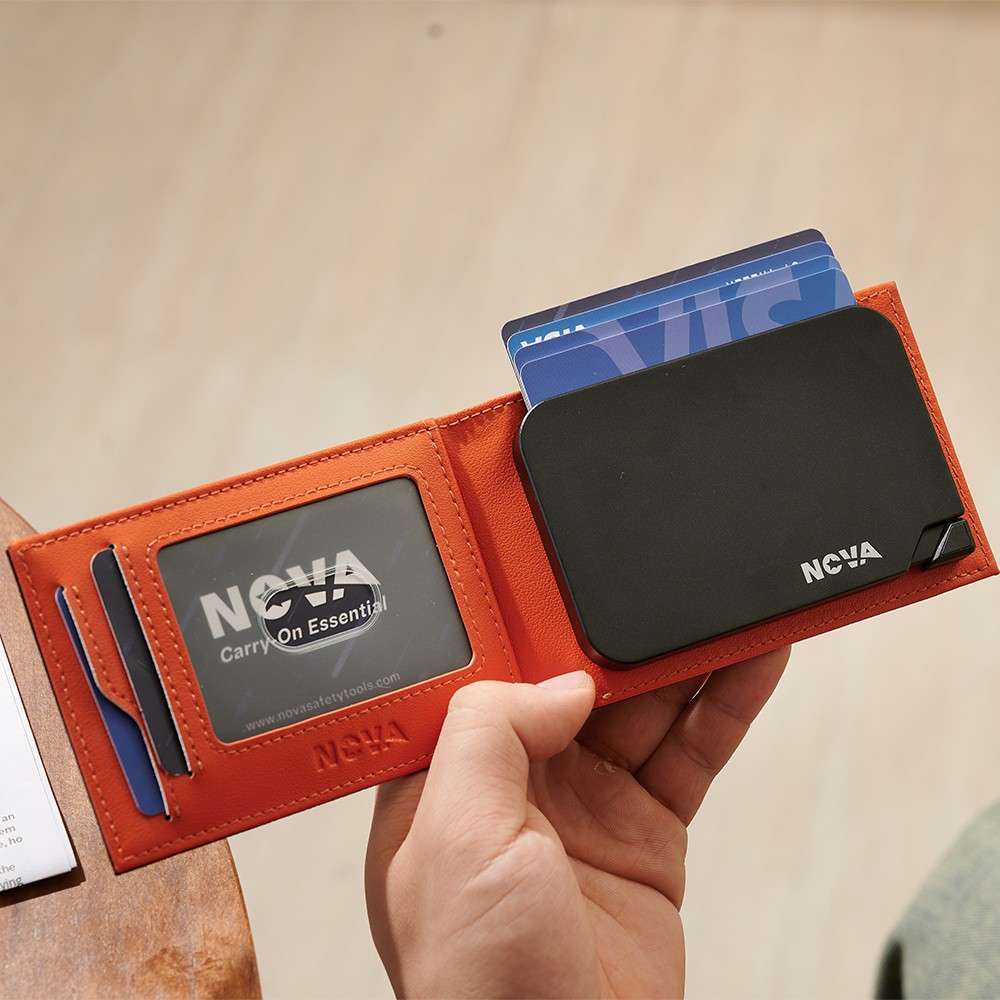
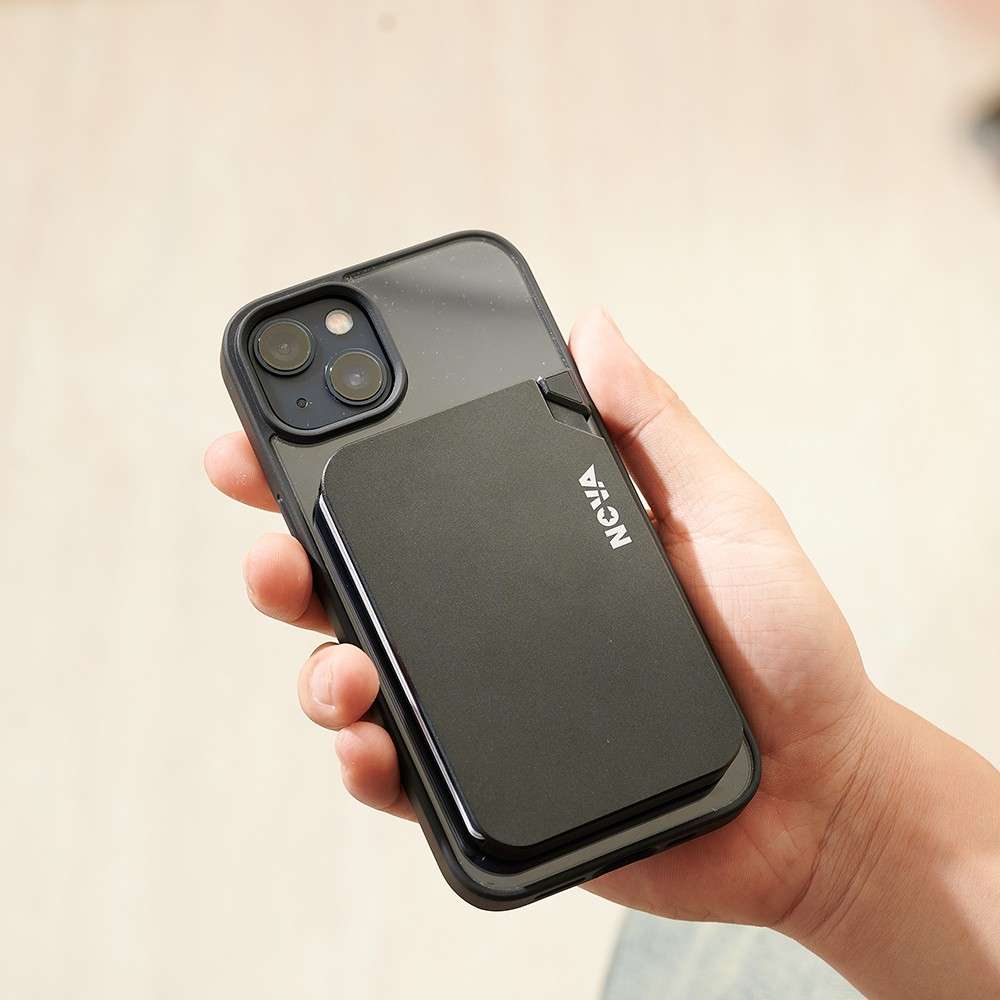
The solution came quickly, and it came complete. He could see the design in his head: slim enough for the front pocket, a quick-access slot for the card he used daily, RFID protection built in from the first layer out, a detachable MagSafe component so the most-used cards could ride on his phone when his hands were already full.
I could see the design in my head, and I couldn’t wait to start sketching.
Gary Wong, Nova Safety Tools
Gary runs Nova Safety Tools, based in Hong Kong, and he builds products around a single operating principle: good design should reduce the small daily frictions people have stopped noticing because they have lived with them too long. The Minimalist RFID Blocking Wallet with MagSafe, now available on Grommet, launched in October 2025 and has collected 126 upvotes. Upvoting the product unlocks 20% off your order.
Everything You Actually Carry
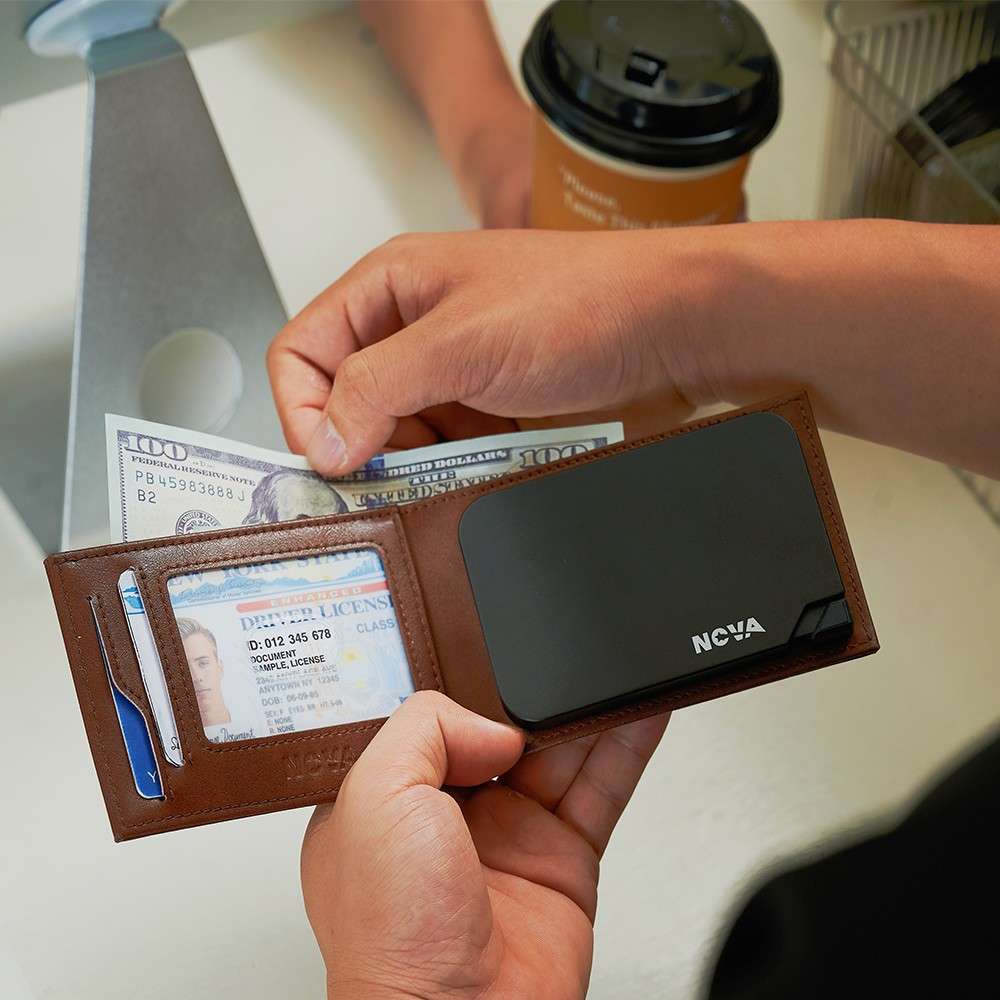
The wallet is a rethinking of what carrying requires. The body is microfiber and aluminum alloy, built to a profile of 11.6 by 7.6 centimeters. A quick-thumb access slot handles the card you reach for most often. A dedicated cash slot fits USD bills. An ID card slot is built in. The detachable MagSafe card holder snaps onto any iPhone 13 through 16, or any MagSafe case, and locks back onto the wallet itself when not attached to a phone. RFID-blocking technology runs throughout, protecting credit and debit cards from the contactless skimming that is increasingly common in dense commuter environments.
The wallet does not try to carry everything. It tries to carry everything you actually use, and nothing you do not.
Gary’s target was the person who knows this frustration: commuters reaching for transit cards, professionals whose bulky wallet ruins the clean line of a jacket, travelers juggling passports and boarding passes in crowded airports. Every one of them has quietly accepted a design that was never built for how they move.
Millimeters of Precision
Gary’s first prototype was, in his own description, a little clunky. He hand-cut layers of stiff material and stitched them together, trying to balance slimness with RFID shielding. The shielding worked. But the wallet felt rigid, the card slots were either too tight or too loose depending on the layer combination, and the overall profile remained bulkier than what he had sketched.
What followed was months of trial and error.
Every time I made the wallet thinner, it risked losing structure or making the RFID shield too rigid. Early prototypes either felt flimsy or so stiff that sliding out a card was frustrating.
Gary Wong
The path forward ran through precision at the millimeter level. He trimmed, tested, and retrimmed. He pushed suppliers to custom-cut certain layers to his specifications rather than accepting standard cuts that were close but not exact. He worked closely with craftsmen who understood that half a millimeter mattered, because in a wallet you carry every day in a front pocket, half a millimeter is the difference between something you notice constantly and something you stop noticing entirely.
That collaboration, custom-cut layers, millimeter-level tolerances, and precision craftsmen who took the specifications seriously, is what separates the final wallet from that first stiff prototype. The card slots are firm enough to hold without releasing unintentionally. They release with a single thumb press.
The First Wallet You Forget You’re Wearing
One of the early pieces of meaningful feedback came from a commuter who bought the wallet for his daily train rides into the city. He told Gary that his old wallet had dug into his thigh every morning, a low-grade irritation he had absorbed into his routine without ever deciding to. With the slim RFID wallet, he said, front-pocket carry finally felt natural. His transit card came out on the first try at the turnstile.
It’s the first wallet I don’t think about during the day, and that’s the best compliment I can give.
Early Customer
That sentence named the goal of the entire project. A wallet is not supposed to be a presence. It is supposed to hold what matters and then step back. The moments when you notice your wallet should be moments of smooth function, not friction. That commuter had articulated the target in one sentence, without knowing it.
Lighter Every Day
Creating the wallet changed Gary’s life in two specific ways, and he is direct about both.
The first is the most immediate. He no longer carries an object that bothers him on his commute. His own wallet is slim, secure, and simple, and that shift has made daily life feel lighter and more intentional. The problem that started on a crowded city bus has been solved, and he experiences that solution every time he reaches into his front pocket without thinking.
The second is harder to quantify. Going from being frustrated by a problem to building a solution that other people use carries its own weight. “Hearing customers say it made their routines easier gives me a sense of purpose and pride I didn’t expect,” Gary says. “It’s proof that small design changes can have a big impact.”
That bus ride home, the coffee in one hand and the backpack on one shoulder and the Metro card jammed in an overstuffed pocket, did not feel like the start of anything. It felt like just another slow evening commute. But the right frustration at the right moment is a blueprint, if you are paying attention.
Gary was paying attention.
Get 20% Off the Minimalist RFID Blocking Wallet
Right now, readers of the Grommet Blog can get 20% off the Minimalist RFID Blocking Wallet through our maker community on Grommet. Just head over to the product page, give it an upvote, and your discount unlocks instantly.