
A food writer and theater kid walks into a borrowed Michelin-starred kitchen with a $40 canner. Twelve mason jars later, baby food changes.
By Greg Rollett, Grommet
This article is presented by Grommet, the leading product discovery platform for new and emerging makers, inventors, and entrepreneurs. Check out thousands of products you never knew existed, but soon won’t be able to live without, right here.
The Coconut Curry That Started It All
Spring 2020. A kitchen in Chicago. A toddler in a high chair, and a bowl that by every conventional rule had no business being there: coconut shrimp curry, fragrant with lime and ginger, still warm from the stove. The baby was not yet a year old. Her mother, Erica Bethe Levin, had been standing at the counter thinking about her first child, a son she loved fiercely and whose taste buds she had, she was convinced, quietly ruined with years of dutiful, pale, unseasoned purées.
This time would be different. Erica set the bowl down, handed over a spoon, and watched her daughter devour it.
“There has to be a better way to feed babies. Why isn’t anyone giving parents real, globally-inspired meals that haven’t been sanitized of allergens?”Erica Bethe Levin, Founder of Globowl
That night in quarantine, with takeout menus piled by the door and the world shrunk down to one kitchen, Erica realized she had been handed a second chance. And she was not going to waste it.
Before the Jars
Erica’s path to a glass jar of Veggie Tikka Masala starts, implausibly, at a Broadway dinner table called Sardi’s. She grew up believing she would be belting out Annie Get Your Gun. She majored in theatre, minored in Italian, and is a bundle of contradictions: a Jewish father, an Italian mother, a professional food writer who will not touch anything white and creamy, a karaoke partner whose entire catalog is Billy Joel, Elton John, Lady Gaga, and showtunes.
She is also, as she puts it, “full-blown OCD,” which she considers an asset. “My attention to detail and relentless drive make me a better entrepreneur,” she says. “My neuroses aren’t just manageable; they’re a competitive advantage.”
Instead of Broadway, she took a different stage. At twenty-four, she founded Chicago’s first digital-only publication for women. She was a founding employee of a restaurant tech startup backed by one of Uber’s co-founders, later acquired by American Express. She once uprooted her life with a seven-year-old and a four-year-old at home to spend two months in London competing on a Gordon Ramsay TV show alongside Lisa Vanderpump, because, as she says, she believes in betting big on yourself.
The through-line, she says, was storytelling, risk-taking, and feeding people. Through words, through tech, and eventually through tiny jars of Tikka Masala.
A Michelin Kitchen After Hours
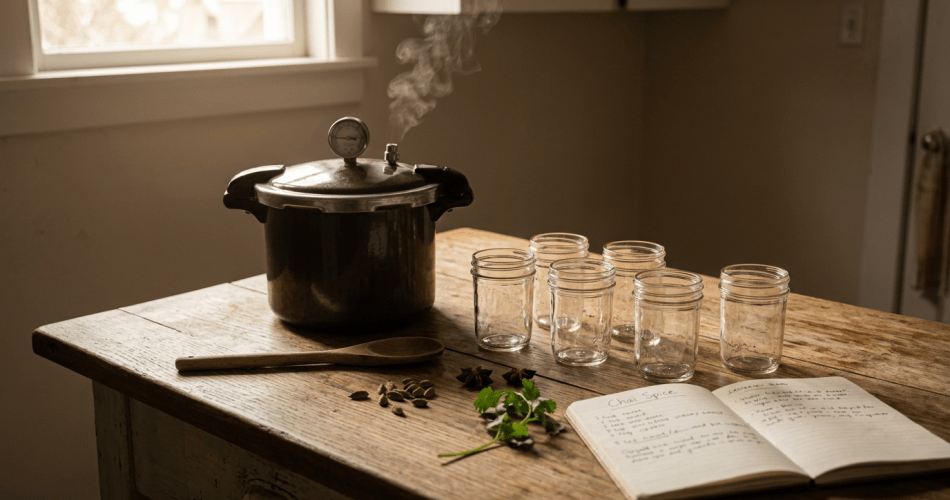
The first Globowl prototype was not a factory run. It was Erica, alone, with a $40 Amazon canner, a stack of mason jars from Target, and a dream. She could seal twelve jars at a time. Each little pop of the lid felt, she says, “so satisfying.”
Twelve-at-a-time was fine until it wasn’t. When street festivals started asking for Globowl, she needed real volume and real equipment. A dear friend, a Chicago chef with a James Beard Award to her name, handed over the keys to her downtown restaurant. Erica would show up before service, pots and produce in hand, and cook and can her babies’ first meals in the same kitchen where, hours later, a Michelin-starred dinner would be plated.
“Nothing says startup hustle,” she laughs, “like making baby food where a chef preps dinner.”
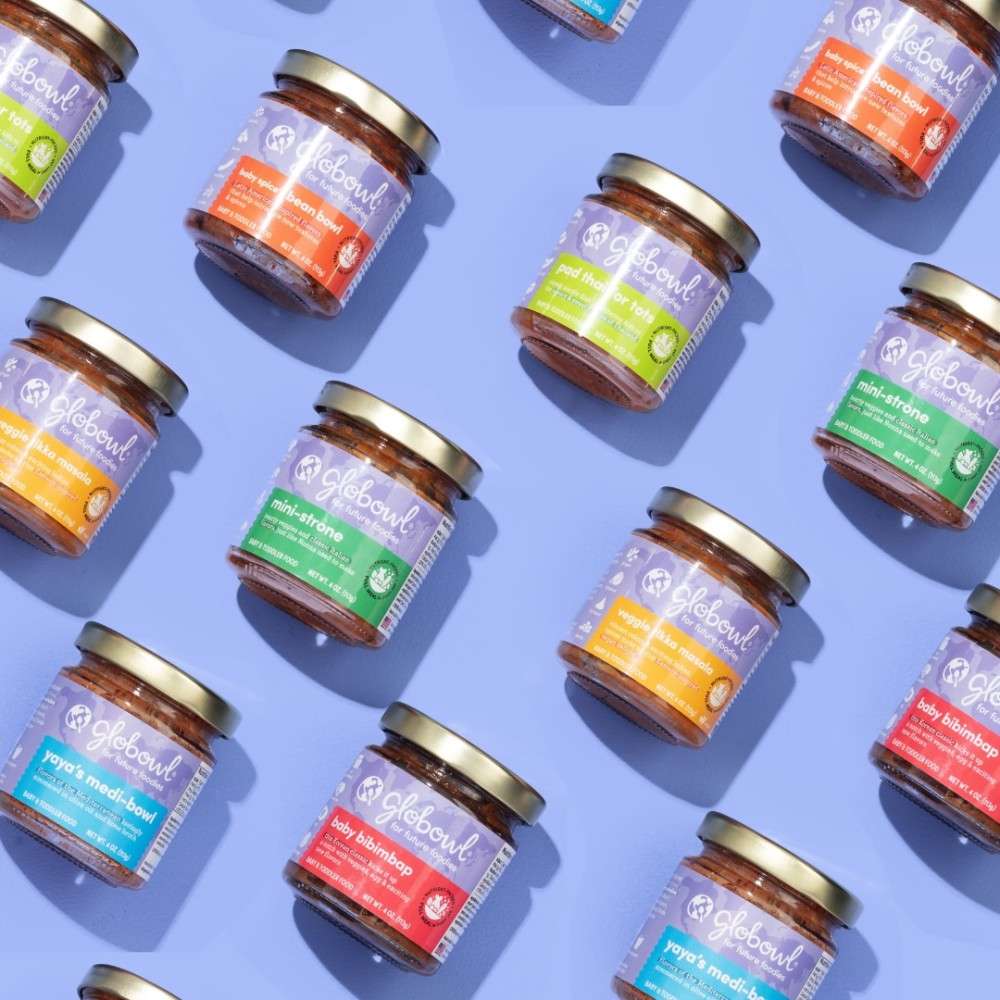
The recipes have grown up since. Today Globowl works with a co-manufacturer on sleek glass jars with gold lids and labels that tell the story of each dish. But the bones of that rustic, scrappy, post-service origin are all still there. And one of the recipes carries an unexpected creative note in its DNA: Gordon Ramsay, tasting an early version of the Baby Spice Bean Bowl, told her it was a little too acidic, because Globowl was relying on natural acids rather than preservatives. She adjusted. He was, to her slight irritation and total delight, right.
The First Two Yeses
Raising capital as a woman, Erica says bluntly, is a master class in rejection. Ninety-eight percent of venture dollars still go elsewhere. Convincing a co-manufacturer to take on a tiny baby-food brand is a second master class. Doing both at the same time is, she says, its own kind of education.
The first yes came from her husband. She told him this would cost their savings, that she would be on the road constantly, that she needed him all-in. He did not flinch. “I’m your partner,” he told her, “I’ll hold down the fort.”
“I’m your partner, I’ll hold down the fort.”
The second yes came from a mentor she describes as one of the most treasured people in her life, who did not just say she believed in Globowl but proved it by sending links to co-manufacturers and connecting her with CPG operators at every turn. Those two yeses, Erica says, felt like “permission to stop dreaming and start building.”
She would need that confidence later. In the early days of the company, a first business partner stole from Globowl and left Erica to pick up the pieces. That she not only survived that betrayal but built the brand into what it is today on her own remains, she says, one of the most validating stretches of her life.
Raising a Generation, One Spoon at a Time
Globowl is built on a scientific premise as much as a cultural one. Around the time Erica was feeding her daughter that first coconut curry, the USDA released its first-ever pediatric feeding guidelines. Two findings jumped out: babies have a “flavor window” between roughly four and eighteen months during which diet diversity most strongly shapes their lifetime palate, and early, repeated exposure to common allergens can significantly reduce the risk of lifelong food allergies.
That, Erica realized, was not mom-gut instinct. That was science, medicine, and research. Globowl was born.
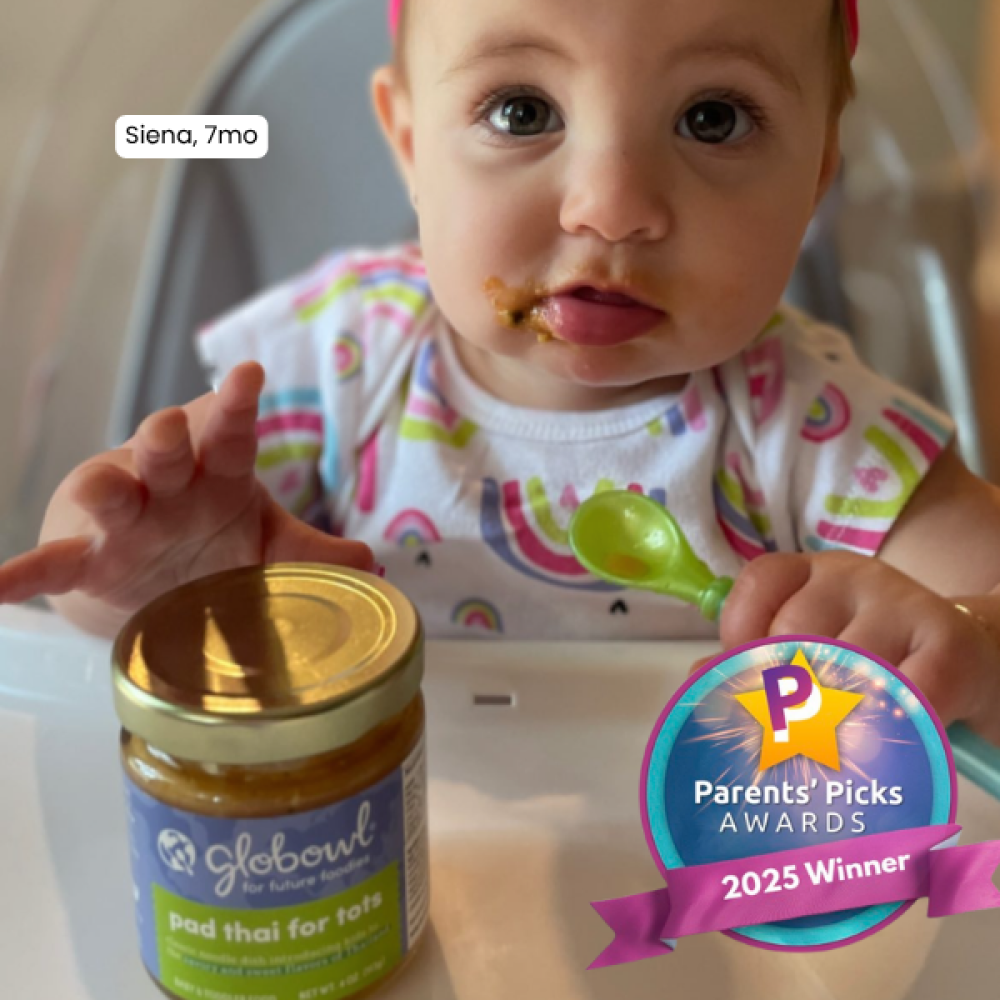
The six-bowl Around the World Variety Pack launched on Grommet on October 30, 2025. Baby Bibimbap. Yaya’s Medi-Bowl. Mini-Strone. Veggie Tikka Masala. Pad Thai for Tots. Baby Spice’s Bean Bowl. Ninety percent or more certified organic, pediatrician and chef approved, recyclable glass jars.
The early validation did not, Erica notes, come from parents of babies. It came from grandparents. From parents of older kids. “I wish this had existed when my babies were little,” they kept telling her. That was the lightbulb. Globowl was not just solving a problem she had. It was solving one that generations of families had quietly carried.
What She’s Really Building
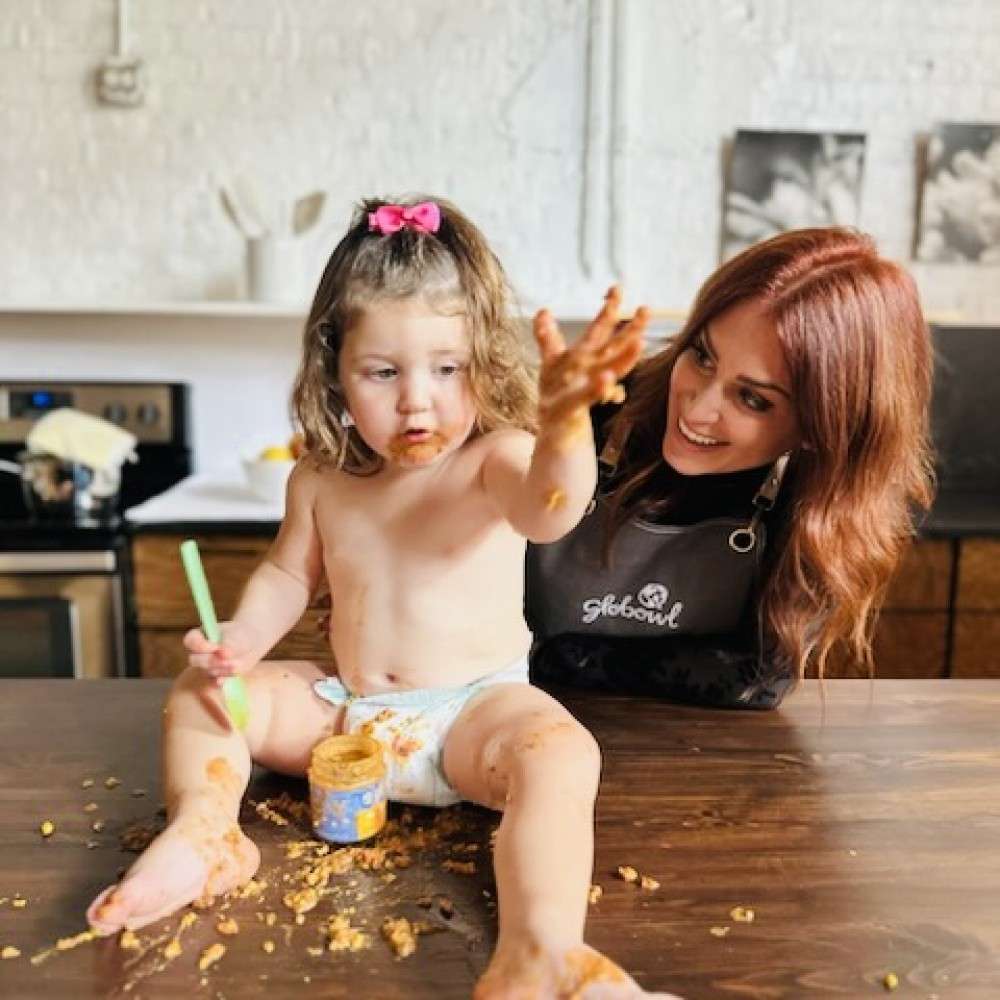
Ask Erica what success looks like for Globowl and she will not lead with revenue. “By exposing children to diversity from their very first bites, we’re not just shaping adventurous eaters,” she says. “We’re raising a generation that will grow up tolerant, accepting, and curious about all people, cultures, and places.” Food, she believes, becomes a child’s first passport.
That is a big claim to pack into a glass jar of chickpea stew. But spend five minutes with Erica and you understand she is not making baby food. She is building a mission, in glass, not plastic; with flavor, not blandness; with inclusion, not limitation.
On the hard days, the ones with rejection emails and supply headaches and the familiar grind of being a founder, she thinks about her own kids. She thinks about the picky eater she created and the adventurous one she did not. She thinks about all the other parents standing in their own kitchens, trying to do one small thing right for the next generation.
And she gets back to work.
Get 20% Off Globowl
Right now, readers of the Grommet Blog can get 20% off Globowl’s Around the World Variety Pack through our maker community on Grommet. Just head over to the product page, give it an upvote, and your discount unlocks instantly.
Click here to meet Erica, upvote Globowl, and get 20% off your order